

Forty prompts, five for each task
Choose a task, set the Speaking timer, and record yourself on your own device. Make brief notes during preparation, then answer aloud. Open the planning notes after your first attempt. These are original PrepEx practice prompts, not recalled exam questions.
Tasks 3 and 4 use the same five pictures, so you can rehearse describing a scene and then predicting what happens next. Task 8 includes five calls using four illustrations: try both giant-boot calls to practise adapting a description to a different listener.
Task 1: Giving Advice
Prepare for 30 seconds. Speak for 90 seconds.
1. A first community presentation
Your friend is giving a short presentation at a neighbourhood meeting for the first time. They know their topic but worry that they will forget what to say. Give your friend advice on preparing and speaking.
Planning notes for after your first attempt
- Choose three manageable actions: organise key points, rehearse aloud, and plan how to recover.
- Explain why each action helps this friend, rather than simply listing tips.
2. Keeping a shared kitchen usable
Your roommate enjoys cooking but finds the shared kitchen crowded in the evenings. Give your roommate advice on preparing meals without getting in everyone else's way.
Planning notes for after your first attempt
- Consider preparation, timing and communication.
- Support suggestions with examples that respect other users of the kitchen.
3. Returning to a hobby
Your cousin wants to take up drawing again after a long break. They have only a little free time and feel discouraged by their first attempts. Give them advice.
Planning notes for after your first attempt
- Suggest a small routine, a way to choose practice activities, and a way to notice progress.
- Keep the tone encouraging without promising quick improvement.
4. Organising a neighbourhood walk
Your neighbour is arranging a casual group walk for residents who have not met before. Give advice on making the event welcoming and easy to join.
Planning notes for after your first attempt
- Consider a clear meeting point, an accessible route and introductions.
- Explain how each suggestion reduces a practical barrier.
5. A new volunteer at a busy desk
Your friend has volunteered to help at a community centre reception desk. They are worried about handling several visitors at once. Give them advice before their first shift.
Planning notes for after your first attempt
- Develop advice about learning the routine, prioritising visitors and asking for help.
- Use a realistic example of two requests arriving together.
Task 2: Talking about a Personal Experience
Prepare for 30 seconds. Speak for 60 seconds.
1. An instruction that finally made sense
Talk about a time when an explanation helped you understand how to do something. What had confused you, what changed, and how did you feel afterwards?
Planning notes for after your first attempt
- Select one short event rather than your whole learning history.
- Make the turning point clear and finish with its effect on you.
2. A plan changed by the weather
Talk about a time when the weather changed a plan you had made. Describe the original plan, the change you made and the result.
Planning notes for after your first attempt
- Keep the original plan brief so there is time for the adjustment.
- Use past-tense sequencing and one concrete detail.
3. Finding a useful second purpose
Talk about a time when you reused an object in a helpful way instead of throwing it away. Explain what you did and why the experience stayed with you.
Planning notes for after your first attempt
- Identify the object and the problem it helped solve.
- Explain the result without turning the answer into a general recycling opinion.
4. A small act of encouragement
Talk about a time when someone encouraged you to keep trying. Describe the situation, what the person did and how you responded.
Planning notes for after your first attempt
- Choose an everyday situation you can explain comfortably.
- Show the difference between how you felt before and after.
5. Noticing a mistake in time
Talk about a time when you noticed a small mistake before it caused a larger problem. Explain what happened and what you learned.
Planning notes for after your first attempt
- Give the listener enough context to understand the mistake.
- Include your action and its result; avoid a long list of background details.
Task 3: Describing a Scene
Prepare for 30 seconds. Speak for 60 seconds.
1. A neighbourhood market
Describe what is happening in this picture to someone who cannot see it.
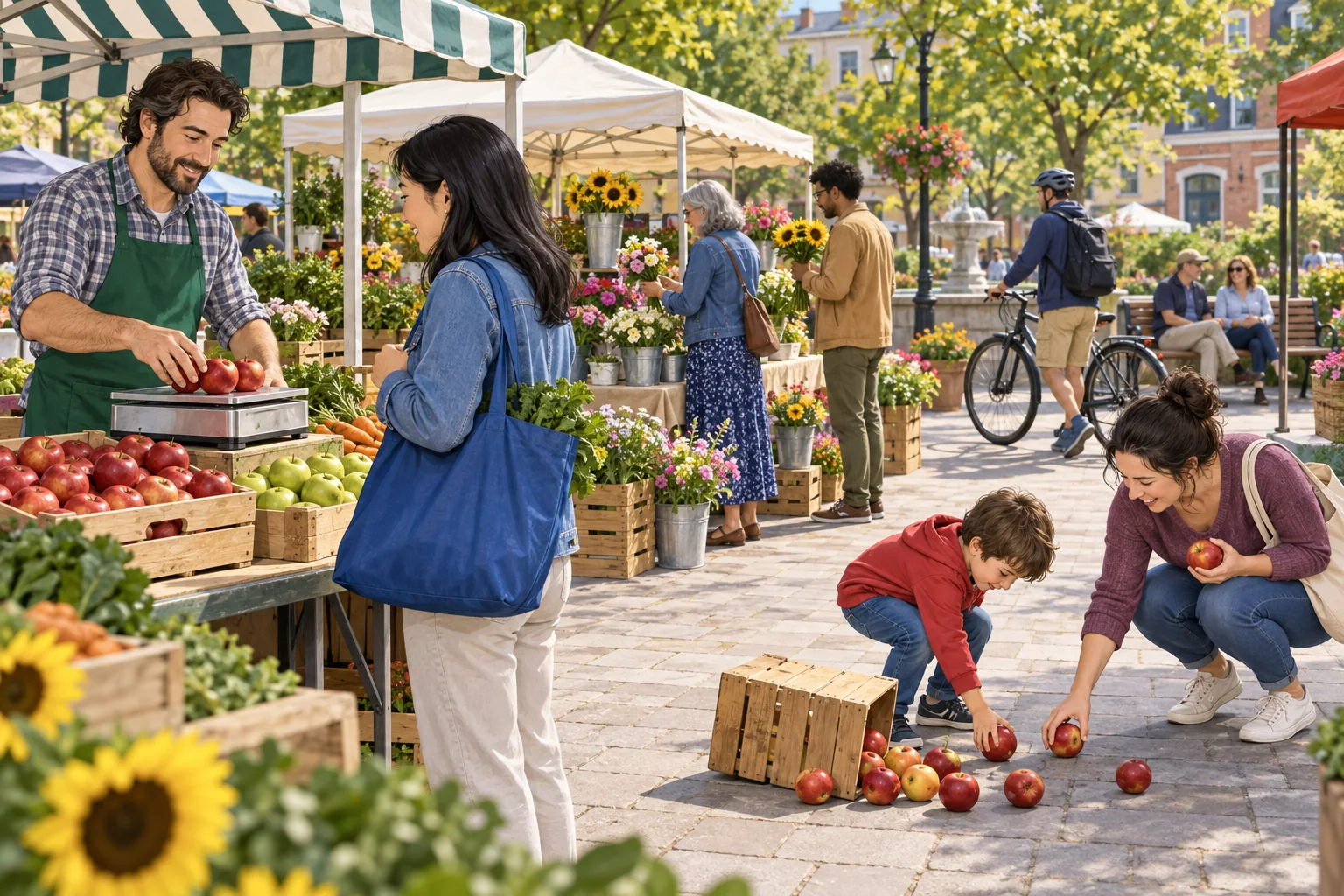
Planning notes for after your first attempt
- Start with the market setting, then move from the fruit stall to the fallen apples and the flower shoppers.
- Distinguish the vendor weighing fruit from the adult and child picking it up; avoid guessing how the crate fell.
2. Boarding a harbour ferry
Describe what is happening in this picture to someone who cannot see it.
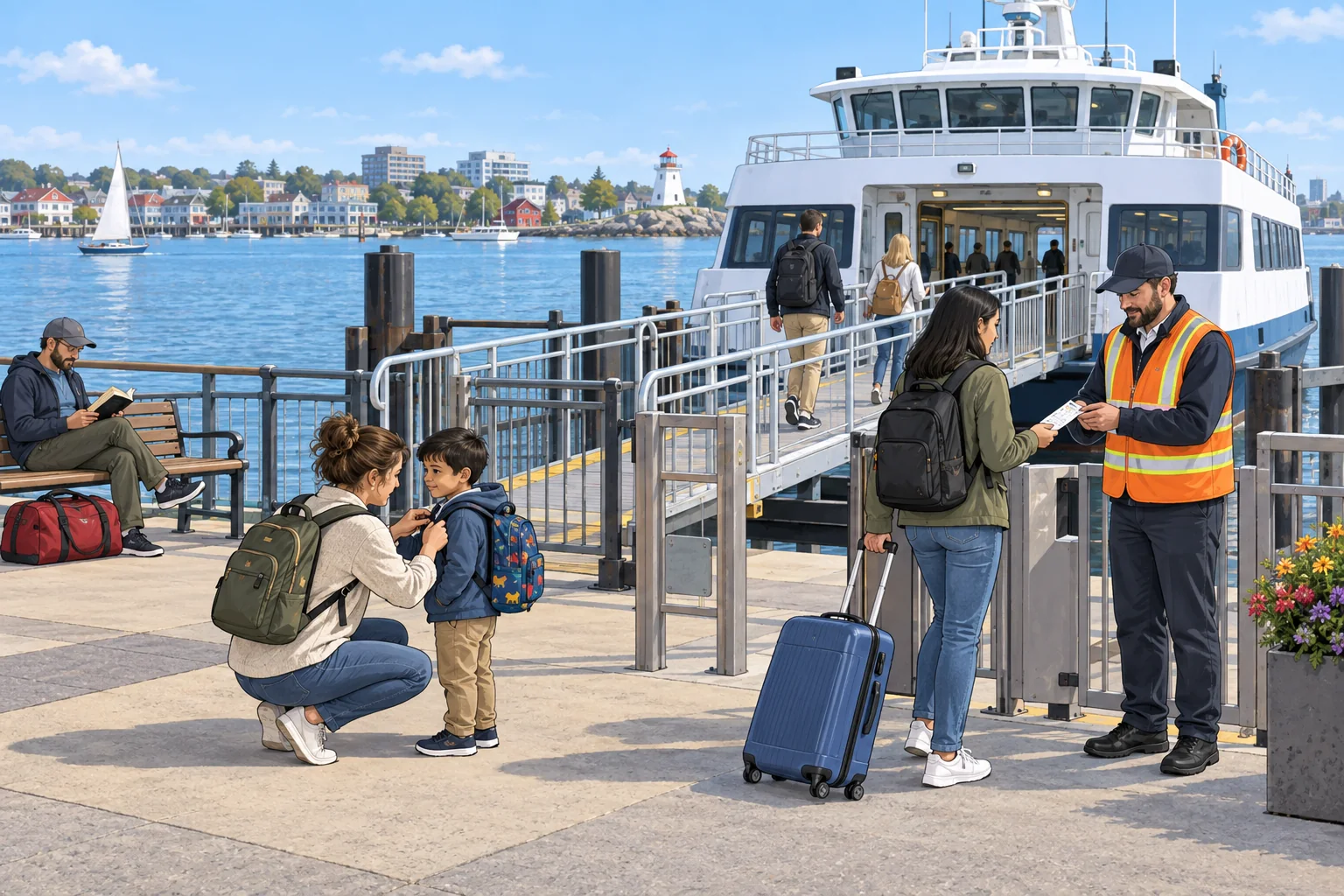
Planning notes for after your first attempt
- Use the boarding ramp to organise the scene: ticket checking beside it, people walking up it, and waiting passengers to the left.
- Describe the adult adjusting the child's backpack without inventing their relationship or destination.
3. Harvest time in the garden
Describe what is happening in this picture to someone who cannot see it.
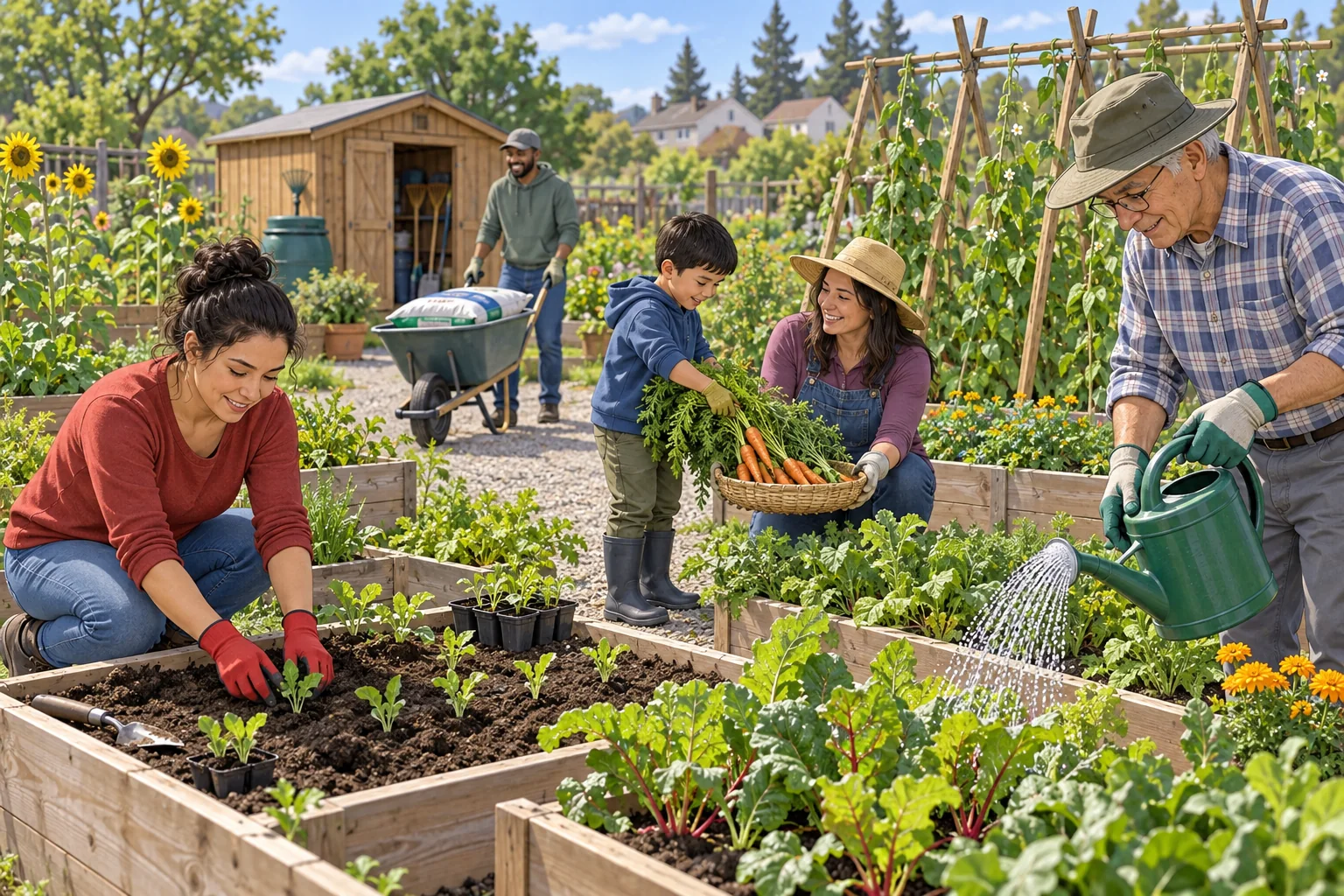
Planning notes for after your first attempt
- Separate planting, watering and harvesting so that your description does more than list garden objects.
- Locate the wheelbarrow and shed behind the raised beds; use the pathways to connect the groups.
4. An afternoon pottery class
Describe what is happening in this picture to someone who cannot see it.

Planning notes for after your first attempt
- Move from the pottery wheel in the foreground to the demonstration, mug painting and bowls being carried behind.
- Use plain action verbs if you do not know a specialist term; the pictured activity matters more than pottery vocabulary.
5. At the outdoor skating rink
Describe what is happening in this picture to someone who cannot see it.
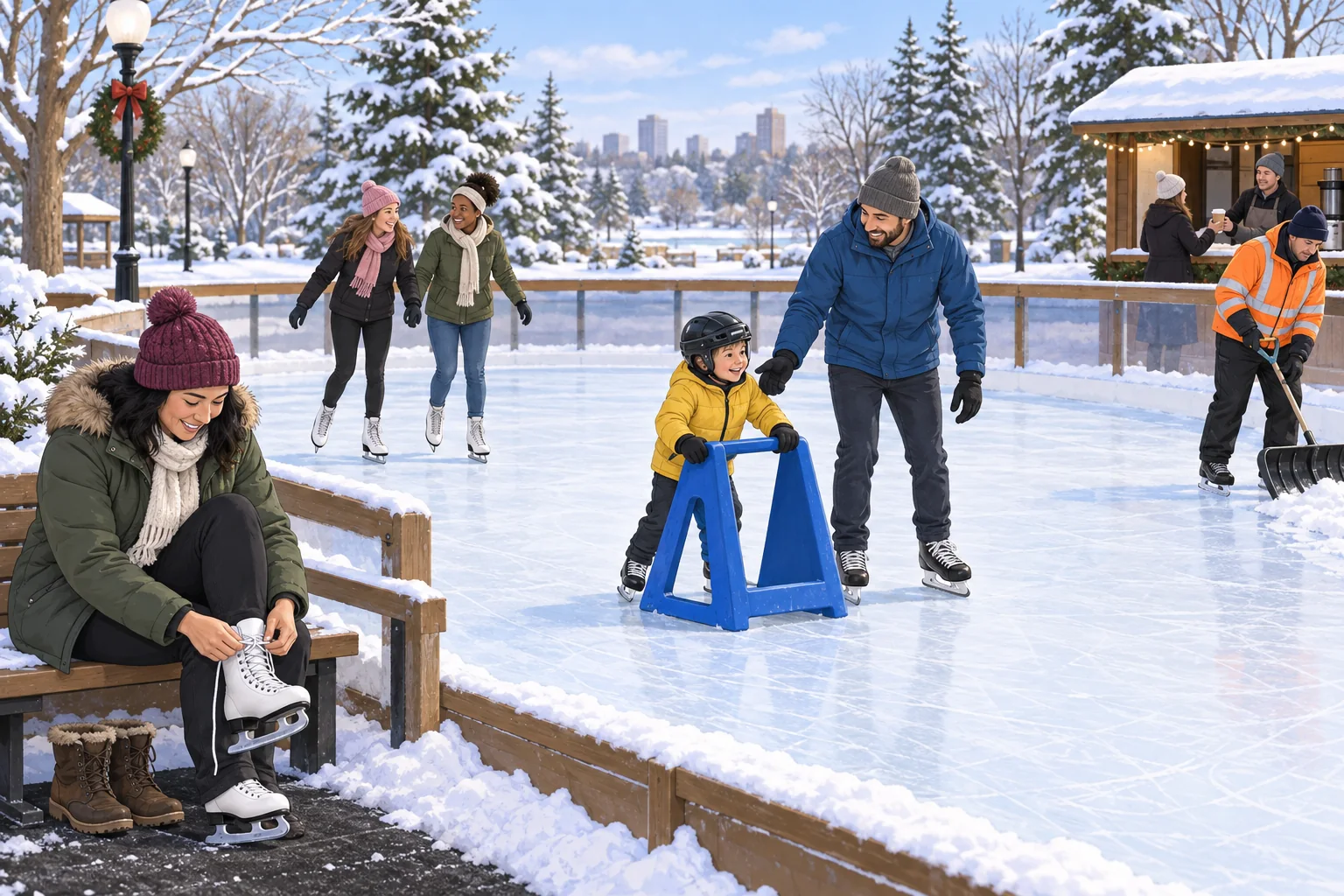
Planning notes for after your first attempt
- Connect the seated skater tying laces, the child using a blue aid and the worker clearing ice by position.
- Describe visible support and movement; do not assume the child is about to fall.
Task 4: Making Predictions
Prepare for 30 seconds. Speak for 60 seconds.
1. What happens next? A neighbourhood market
Look at this picture. Explain what you think will probably happen next, using details in the picture to support your predictions.
Planning notes for after your first attempt
- The fruit on the ground makes further collecting or replacing the crate plausible; explain that clue.
- The customer beside the scales may finish buying fruit. Keep uncertain actions as possibilities.
2. What happens next? Boarding a harbour ferry
Look at this picture. Explain what you think will probably happen next, using details in the picture to support your predictions.
Planning notes for after your first attempt
- Use the ticket check and people on the ramp to support a prediction about boarding.
- The adult adjusting the backpack may finish helping the child; do not invent a missed departure.
3. What happens next? Harvest time in the garden
Look at this picture. Explain what you think will probably happen next, using details in the picture to support your predictions.
Planning notes for after your first attempt
- Consider what the person with the watering can or the pair with carrots may do next.
- Support a prediction with the tool or action you can see, rather than a distant future harvest.
4. What happens next? An afternoon pottery class
Look at this picture. Explain what you think will probably happen next, using details in the picture to support your predictions.
Planning notes for after your first attempt
- The learner watching the demonstration may try the technique; explain why the watching matters.
- The person carrying bowls may place them on the nearby shelving. Avoid inventing a breakage.
5. What happens next? At the outdoor skating rink
Look at this picture. Explain what you think will probably happen next, using details in the picture to support your predictions.
Planning notes for after your first attempt
- The seated person may step onto the ice after tying her skate; that visible preparation supports the prediction.
- The child may continue practising with the blue aid while the worker clears another section. Keep the forecast safe and plausible.
Task 5: Comparing and Persuading
Choose silently for up to 60 seconds, then reveal the new alternative. Prepare for 60 seconds and speak for 60 seconds. The cards below are a text-based practice adaptation; use the Practice Hub for the staged task experience.
1. A place for a reading group
You and a friend are choosing a place for an eight-person reading group. Choose one of these two options silently.
Option 1: Library room
Free; quiet; eight seats around one table; available Saturday morning.
Option 2: Cafe alcove
Each person buys a drink; ten seats; lively atmosphere; available Saturday afternoon.
Chosen an option? Reveal the other person's choice
Community lounge
Room fee of $24 for the group; twelve seats; comfortable sofas; available Saturday evening.
Your friend prefers the community lounge. Persuade your friend that your earlier choice is better for the reading group.
Planning notes for after your first attempt
- After the reveal, compare your chosen option with the new alternative using their actual features.
- Acknowledge one advantage of the other choice, then explain why your priority matters more.
2. An activity for visiting friends
You and your roommate are planning an afternoon for four visiting friends. Choose one of these two activities silently.
Option 1: Self-guided waterfront walk
Free; outdoors; about two hours; flexible start time.
Option 2: Small local museum
Entry costs $12 per person; indoors; about ninety minutes; closes at five.
Chosen an option? Reveal the other person's choice
Cooking workshop
Costs $35 per person; indoors; two hours; starts at three.
Your roommate prefers the cooking workshop. Persuade your roommate that your earlier choice is better for this visit.
Planning notes for after your first attempt
- After the reveal, compare your chosen option with the new alternative using their actual features.
- Acknowledge one advantage of the other choice, then explain why your priority matters more.
3. A gift for a club volunteer
Your club is choosing a thank-you gift for a volunteer who enjoys practical activities. Choose one of these two options silently.
Option 1: Art-supply voucher
Costs $40; recipient chooses the materials; usable online or in one local store.
Option 2: Beginner gardening kit
Costs $35; seeds, gloves and three pots included; delivered to the recipient.
Chosen an option? Reveal the other person's choice
Pottery session
Costs $45; one instructor-led session; materials included; must be used on a weekday.
Another club member prefers the pottery session. Persuade that member that your earlier choice is better for the volunteer.
Planning notes for after your first attempt
- After the reveal, compare your chosen option with the new alternative using their actual features.
- Acknowledge one advantage of the other choice, then explain why your priority matters more.
4. A way to share club updates
You and another organiser need a way to share updates with a twenty-person hobby club. Choose one of these two options silently.
Option 1: Weekly email
Free; one organised summary; members can read at any time; replies go to the organiser.
Option 2: Group message chat
Free; immediate updates; members can reply to everyone; frequent notifications possible.
Chosen an option? Reveal the other person's choice
Printed monthly sheet
Printing costs $10 each month; handed out at meetings; easy to keep; late changes need a separate notice.
The other organiser prefers the printed sheet. Persuade that organiser that your earlier choice is better for the club.
Planning notes for after your first attempt
- After the reveal, compare your chosen option with the new alternative using their actual features.
- Acknowledge one advantage of the other choice, then explain why your priority matters more.
5. A storage solution for shared supplies
You and a neighbour need somewhere to keep shared gardening supplies. Choose one of these two options silently.
Option 1: Lockable outdoor box
Costs $120; holds tools and gloves; stays beside the garden; no indoor space needed.
Option 2: Indoor shelving unit
Costs $75; holds tools, gloves and seed trays; kept in a shared room; accessible during building hours.
Chosen an option? Reveal the other person's choice
Small outdoor shed
Costs $250; holds tools and a wheelbarrow; accessible at any time; needs assembly.
Your neighbour prefers the shed. Persuade your neighbour that your earlier choice is better for the shared supplies.
Planning notes for after your first attempt
- After the reveal, compare your chosen option with the new alternative using their actual features.
- Acknowledge one advantage of the other choice, then explain why your priority matters more.
Task 6: Dealing with a Difficult Situation
Prepare for 60 seconds. Speak for 60 seconds.
1. A borrowed table needed twice
You promised to lend your folding table to a friend on Saturday. Your building now needs the same table for a resident event that day. Choose either to keep your promise to your friend or to ask the friend to make another arrangement. Speak directly to the person affected and explain your decision.
Planning notes for after your first attempt
- Name the decision early and acknowledge its effect on the listener.
- Give specific reasons and offer a practical next step without pretending the conflict disappears.
2. A group photo someone wants removed
A club member asks you to remove a group photo you posted because they do not want to appear online. Another member wants to keep it as a record of the event. Decide whether to remove the photo or replace it with a version that leaves the first person out. Speak to the member who wants to keep the original and explain your decision.
Planning notes for after your first attempt
- Treat the concern respectfully.
- Explain the chosen action and a reasonable way to preserve the event record.
3. A rehearsal and a quiet neighbour
Your small music group planned to rehearse in your living room on Friday evening. Your neighbour has asked for quiet that evening because they are preparing for an early start. Choose either to move the rehearsal or to ask your group to rehearse quietly for a shorter time. Speak to your group leader and explain the decision.
Planning notes for after your first attempt
- State the chosen arrangement and why it is workable.
- Recognise the group's preparation needs as well as the neighbour's request.
4. Changing a shared project partner
You agreed to work with a classmate on a short presentation. Another classmate now asks you to join their group because they have lost a partner. Decide whether to keep your original arrangement or to ask your current partner about joining the other group together. Speak to the classmate who has asked for help and explain your decision.
Planning notes for after your first attempt
- Be clear about what you can actually commit to.
- Avoid blaming either classmate; explain the existing responsibility.
5. An item saved for a late collection
You are giving away a bookshelf. One neighbour promised to collect it today but has just asked you to wait a week. A second neighbour can collect it tomorrow, and you need the space. Decide whether to hold it or offer it to the second neighbour. Speak to the first neighbour and explain your decision.
Planning notes for after your first attempt
- Connect your decision to the practical timing issue.
- Stay courteous and make the next step unambiguous.
Task 7: Expressing Opinions
Prepare for 30 seconds. Speak for 90 seconds.
1. One shared space without phones
Should community centres offer a room where visitors are asked to put their phones away? Explain your opinion.
Planning notes for after your first attempt
- Take a clear position and develop two distinct reasons.
- Consider who benefits and address a practical exception or limitation.
2. Learning basic repairs
Should secondary schools offer a short course in repairing everyday household items? Explain your opinion.
Planning notes for after your first attempt
- Explain a concrete use for the skill and a separate educational benefit or drawback.
- Avoid assuming students already have tools or specialist knowledge.
3. Booking park picnic tables
Should people have to reserve popular public picnic tables in advance? Explain your opinion.
Planning notes for after your first attempt
- Think about fair access and how spontaneous visits would work.
- Use one specific situation to support your position.
4. A meeting-free afternoon
Should workplaces set aside one afternoon each week with no internal meetings? Explain your opinion.
Planning notes for after your first attempt
- Connect the policy to actual work rather than simply saying meetings are bad.
- Consider a situation where an exception would be sensible.
5. Borrowing things locally
Should neighbourhood organisations create a library for lending items such as games, tools and sports equipment? Explain your opinion.
Planning notes for after your first attempt
- Develop benefits or concerns about access, maintenance and responsibility.
- Use an example that does not depend on specialist equipment knowledge.
Task 8: Describing an Unusual Situation
Prepare for 30 seconds. Speak for 60 seconds.
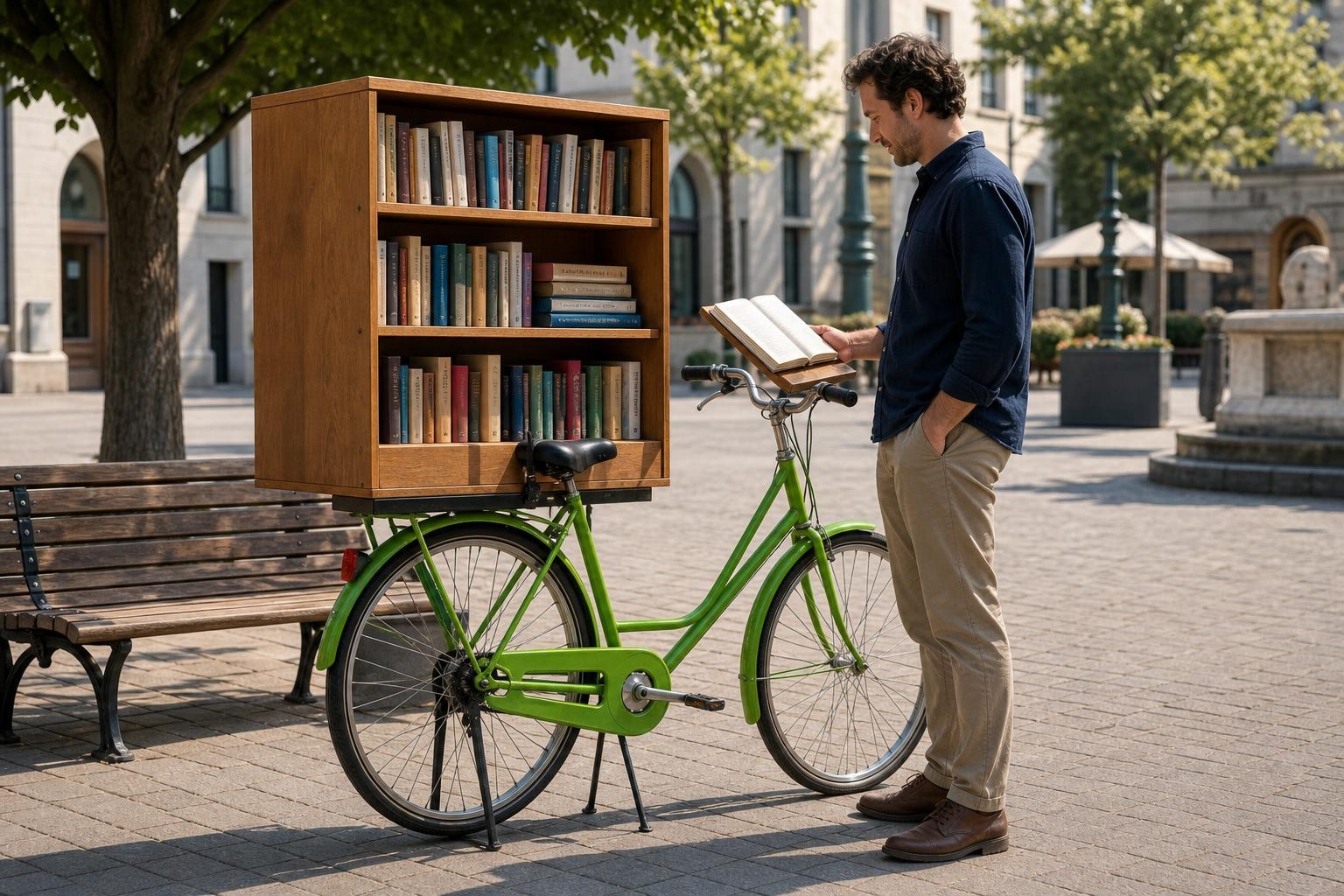
1. A moving library
You are in a public square and see this unusual bicycle. Call a friend who likes books, describe what you see, and explain what makes it unusual.
Planning notes for after your first attempt
- Describe how the green bicycle combines a tall bookcase over the rear wheel with a small reading support near the handlebars.
- Use the ordinary bench and the person beside it to give a sense of size; do not claim it can be ridden safely.
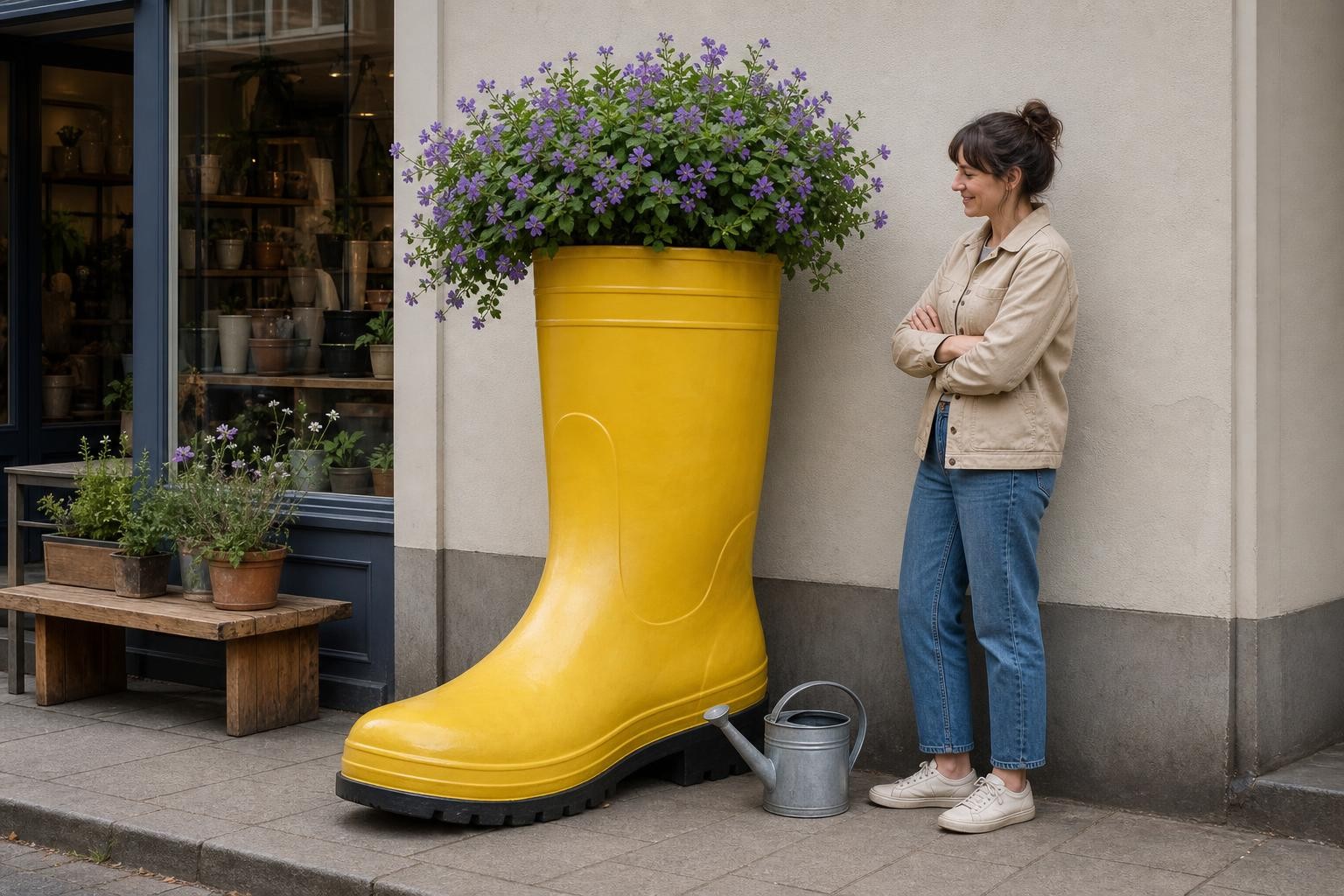
2. A surprising shop display
You are outside a shop and see this unusual display. Call your friend, describe it in detail, and explain why it caught your attention.
Planning notes for after your first attempt
- Compare the yellow boot with the person and normal watering can beside it to convey its unusual scale.
- Describe the plants and purple flowers at its top, separating its boot shape from its use as a planter.
3. Somewhere unusual to sit
You are waiting in a covered plaza and see this unusual seat. Call a friend who is on their way, describe it, and explain how they will recognise it.

Planning notes for after your first attempt
- Explain the blue bowl shape, its metal base and the person sitting inside it.
- Contrast the seat with the ordinary closed umbrella beside it so your friend can picture the resemblance.
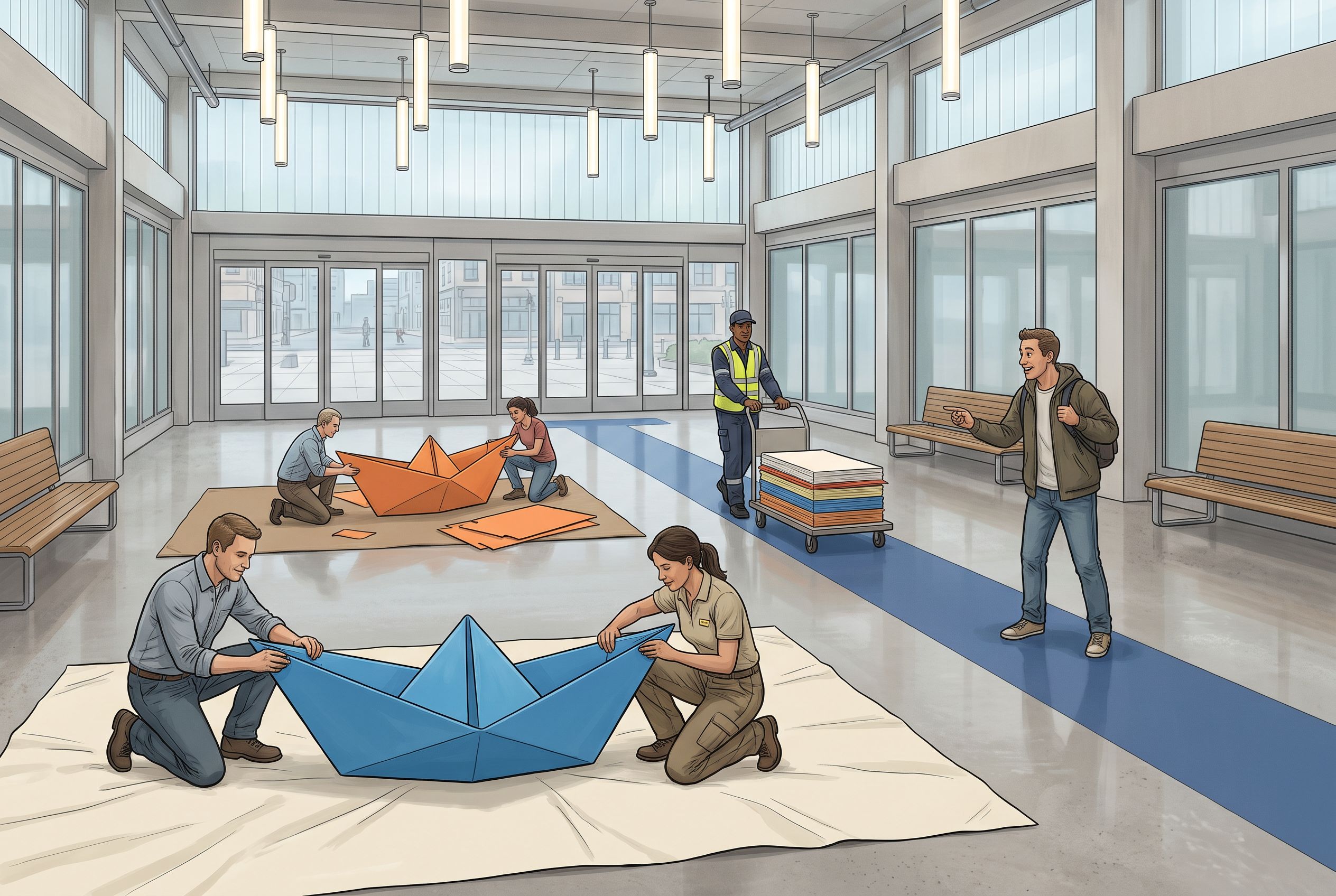
4. Giant paper boats indoors
You are in a transit building and see this unexpected activity. Call a friend, describe what people are doing, and explain what makes the scene unusual.
Planning notes for after your first attempt
- Compare the giant blue and orange folded boats with the kneeling people to explain the scale.
- Describe the cart of large paper sheets and the indoor setting without inventing the event's purpose.
5. A planter idea for your club
Your gardening club is collecting ideas for an unusual display. You see this planter outside a shop. Call another club member, describe its appearance and size, and explain the feature you want them to imagine.
Planning notes for after your first attempt
- Begin with the yellow boot shape and the opening filled with flowers; use the nearby person to make its size clear.
- Explain which visual feature could inspire a club display without claiming you know how the planter was built.
Review one change, then try a fresh prompt
Listen back for whether the listener can follow your ideas, whether your words convey the intended meaning, whether your speech is understandable, and whether you did what the task asked. Choose one specific improvement and record a new response. Compare four earlier and revised audio examples to see how development changes a response.
For Task 2, you can invent an everyday experience if a real one does not come to mind. For pictures, stay with visible details and supported possibilities. For Task 5, compare your selected option with the newly revealed alternative, not the option you discarded.
Common questions
Are these real CELPIP exam questions?
No. These are original PrepEx practice prompts. They are not recalled exam questions or predictions of future test content.
How should I use the questions?
Choose one prompt and use the Speaking timer. Record yourself with your own recorder if useful, then review whether your response addresses the listener and develops the required ideas. Try a different prompt after revising.
Do the picture tasks include images?
Yes. The scene, prediction and unusual-situation prompts include pictures. Comparison tasks provide the details you need to compare the choices.
Can I download the questions without an account?
Yes. The free PDF includes all 40 prompts and planning notes. The complete collection is also readable on this page.
Sources and last check
Official sources checked November 12, 2026. These original PrepEx exercises and teaching examples are independent preparation materials. Official sources govern test format and scoring.