Link each plausible next action to a visible clue. Possibility is different from certainty.
Preparation: 30 seconds. Response: 60 seconds.
These three original study answers vary the situation and reasoning. They are unscored teaching examples. Try each prompt before listening, then identify how the response meets its audience and purpose.
Look at the picture and explain what you think may happen next and why.
Listen to the model response · 120 words · 60-second task window
Transcript
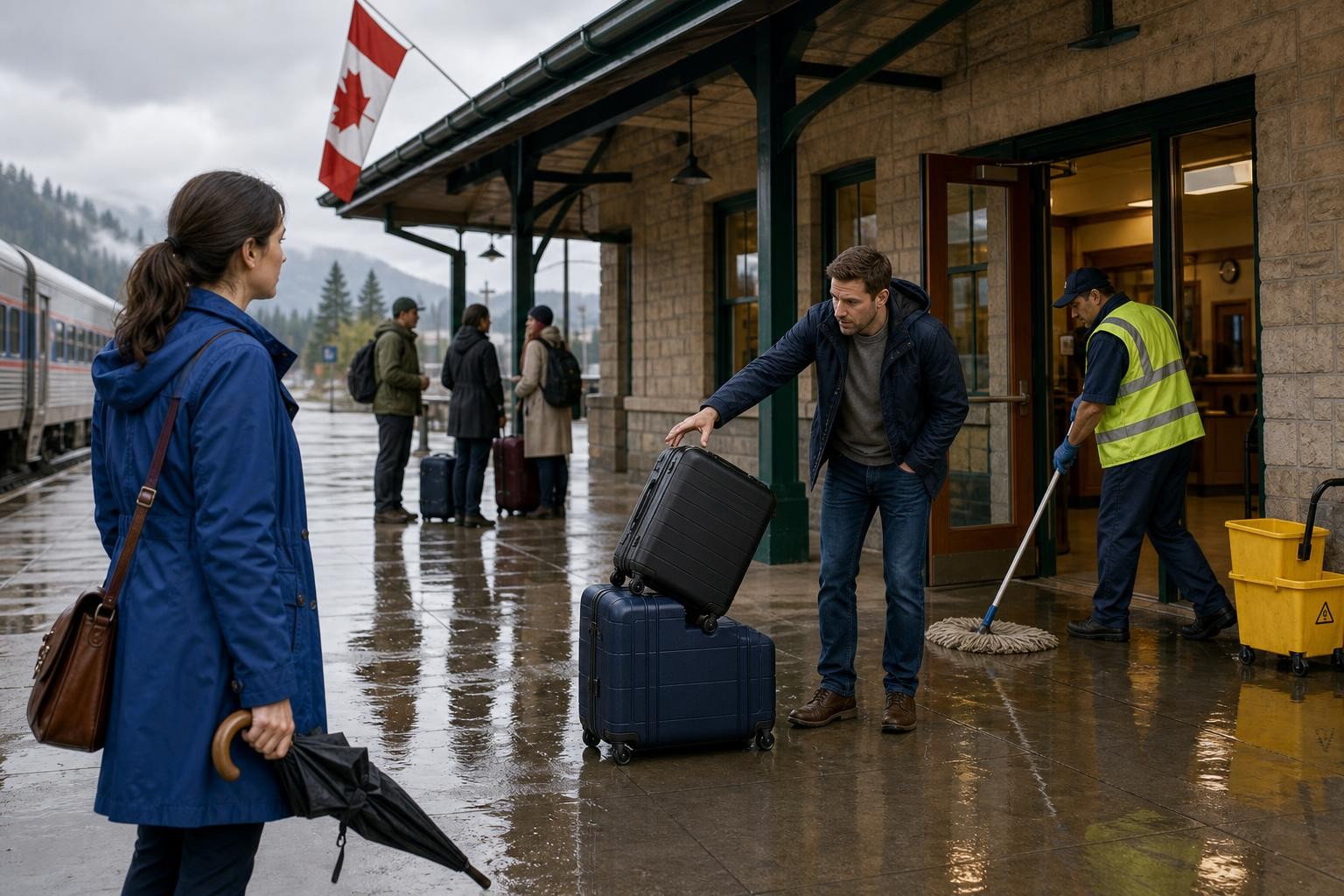
The traveller beside the suitcases will probably steady the upper bag, because it is leaning and someone is already reaching towards it. The man may then put that suitcase on the ground rather than leave the bags stacked. Near the doorway, I expect the worker to continue cleaning the wet floor as more passengers arrive. The rain and umbrellas suggest that people will keep bringing water inside. Some of the people under the canopy might wait until the rain eases before leaving the station. Others may open their umbrellas and walk out sooner. Those are possible next steps, rather than events we can know for certain. The luggage and the wet entrance seem likely to attract the most immediate attention.
What to notice
Each prediction has a visible basis: leaning luggage, a reaching hand or the wet entrance.
Different degrees of certainty appear in 'probably,' 'may' and 'might.' The response does not describe guesses as facts.
The two possible choices under the canopy show realistic alternatives, not a single invented outcome.
Revision to practise: After 'The suitcase may fall,' add the clue and a plausible intervention: someone is already reaching to steady it.
Making room for the plank
Community workshop
Original study prompt
Look at the picture and explain what you think may happen next and why.
Listen to the model response · 127 words · 60-second task window
Transcript
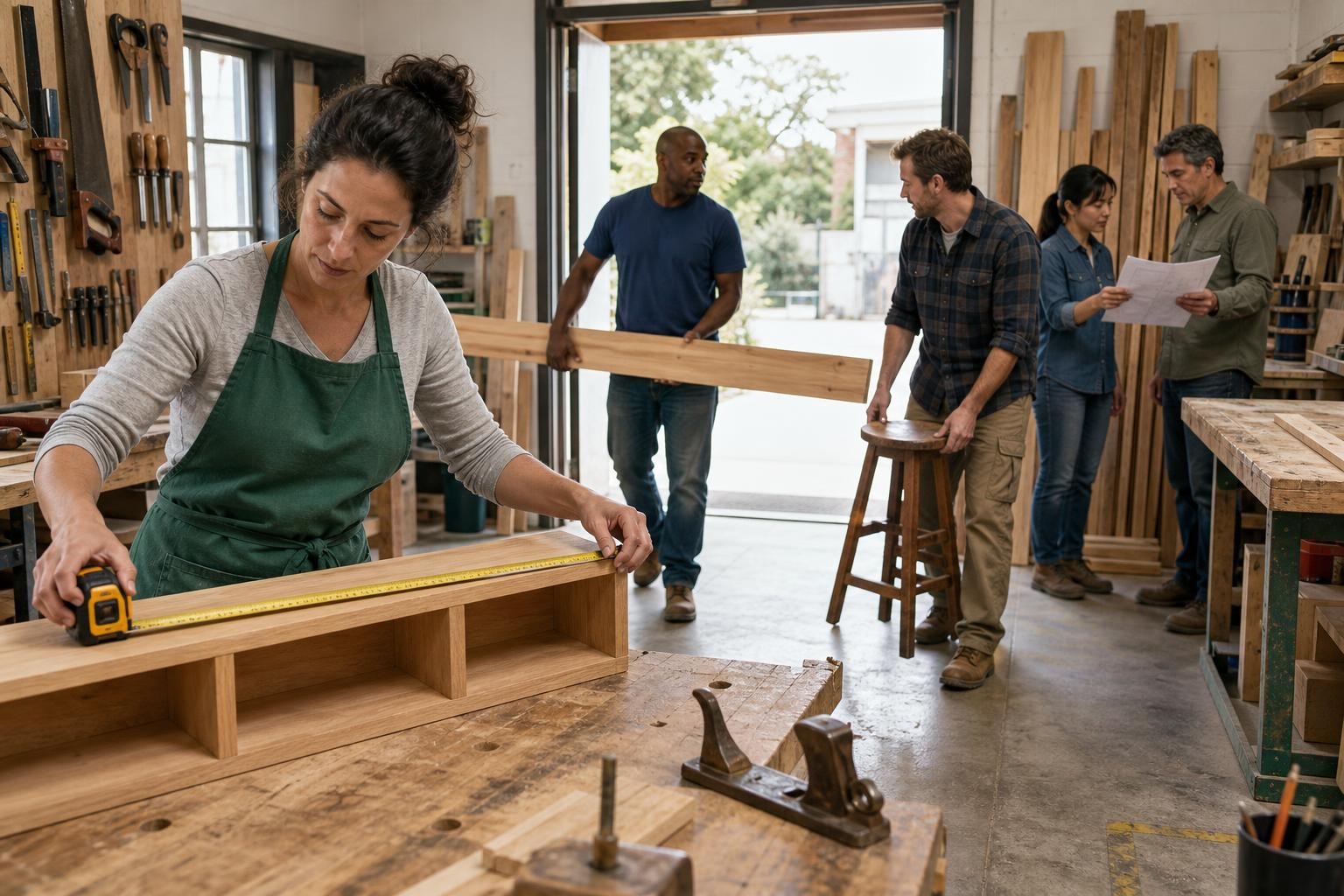
I think the person moving the stool will clear a path so the man can bring the long plank fully into the workshop. Once he has enough room, he may put it on a table or alongside the other boards. The woman measuring the shelf will probably check the measurement before marking the wood, since she seems to be working carefully rather than rushing. At the back, the two people looking at the drawing might decide which board they need next. They could then help with the plank that is arriving. The shared materials make that a reasonable possibility, although the image doesn't tell us their exact plan. I expect the work to continue in stages, with people coordinating so they don't get in one another's way.
What to notice
The main prediction follows from an action already beginning: clearing the path.
The response separates probable immediate actions from a less certain shared project.
It avoids assuming a particular finished object or an accident that the image does not support.
Revision to practise: Support 'They will work together' with the visible drawing, stacked boards and incoming plank.
Responding to the weather
Park picnic
Original study prompt
Look at the picture and explain what you think may happen next and why.
Listen to the model response · 126 words · 60-second task window
Transcript
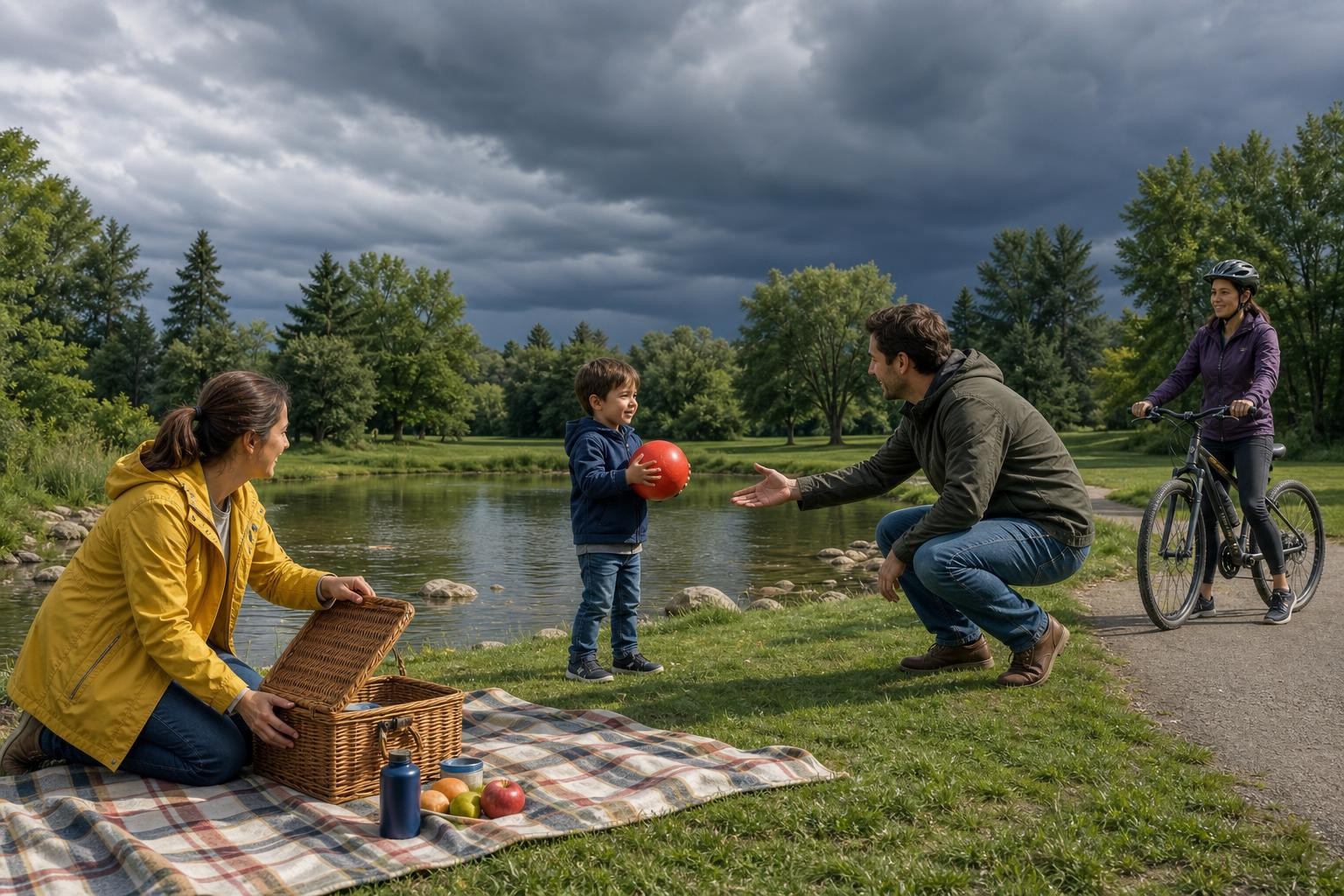
The picnic group may begin packing up, because the dark clouds suggest that rain could be approaching. The person beside the open basket might close its lid to protect the food. The adult beside the child will probably ask for the ball or guide the child back towards the blanket. That would keep the group together while they decide what to do. The cyclist might ride away along the path, or stay briefly to speak to the people nearby. There isn't enough detail to know which. If the weather gets worse, the group could look for shelter away from the pond. I wouldn't assume that the picnic is definitely over, though; they may simply be putting things away while waiting to see whether the clouds pass.
What to notice
Clouds support a weather possibility, not a certain storm.
The open basket and the person beside it support a possible action to protect the food, not proof that packing up has begun.
The response explicitly limits the cyclist prediction and avoids inventing a dangerous outcome.
Revision to practise: Qualify a prediction when the clue is weak: 'The cyclist might leave, but the picture doesn't show their intention.'
Make the next response your own
Keep the communicative purpose, but change the details you would naturally use. Practise the revision suggested after each example. Then record within the task window and check your actual audio for clarity and flow; a written transcript alone cannot establish listenability.
Format and assessment references
Task times and teaching focus were checked against the official 2026 Speaking Pro guide and official performance examples on October 2, 2026. PrepEx examples and annotations are independently authored study material; no official score or endorsement is implied.